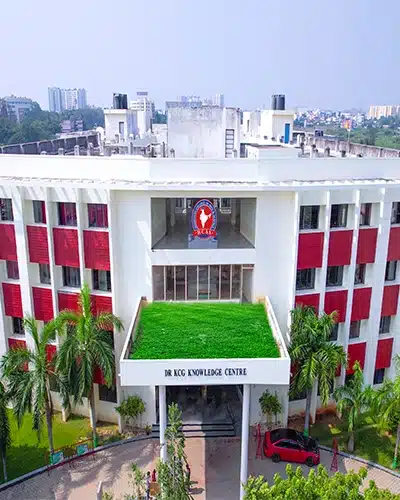


The college runs a full-fledged clinic which takes care of the students’ health and hygiene. Periodical medical examinations and vaccinations are provided for the staff and students through Smart Vision Diabetes Clinic which is the sister concern of the college.
The main objective to establish the herbal garden is

India has rich diversity of more than 10,000 medicinal plants. Over the centuries, people in India have a fascination and respect for the natural heritage, traditional plant ethics, and herbal medicine. This wealth of traditional herbal knowledge is diminishing with the advancement of modern medicine. A significant part of knowledge and tradition is currently being eroded due to modernization, urbanization, shrinking of forest resources and availability of alternatives. However, these valuable traditional practices are still followed in interior tribal areas of India. According to World Health Organization (WHO), more than 80% of the world’s population relies on traditional medicines for their primary health care needs. Therefore it is important to inculcate the young minds to realize the fascinating knowledge and tradition, associated with these resources and help them understand the immense potential for the future.
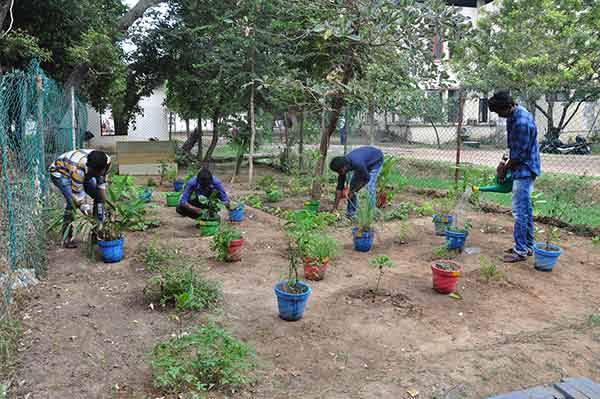
In view of the above reason, the Department of Biotechnology, Hindustan College of Arts & Science established an herbal garden on 15-02-2018 to popularize the use of commonly available medicinal plants and also encourage the student to pursue research on the same. Department of Biotechnology is responsible for the maintenance of the Herbal Garden with the active involvement of the Enviro-club volunteers. The development of the herbal garden is taken care of by the staff in charge, Dr. T. Ramesh. The herbal garden contains 10 rare and 30 common medicinal plants.

Botanical Name: Albizia lebbeck
Kingdom: Plantae
Family: Fabaceae
Genus: Albizia
Species: A. lebbeck
Location: Native to Indo-Malaya, Northern Australia and New Guinea. It is widely cultivated in other tropical and subtropical regions.
Description: Albizia lebbeck is a tree with a height of 18-30m tall and the leaves are long up to 15cm having four pairs of pinnae and it consists of six to eight leaflets in each pinnae. The flower of this tree is white in colour and contains long stamens along with a pleasant fragrance. There are 6-12 seeds in the fruit of a pod which as 2.5-5cm broad and 15-30cm long.
Medicinal Uses: Bark of this tree is used medicinally to treat inflammation and also acts as a psychoactive. Also, it can aid to treat boils, cough, gingivitis, abdominal tumors, eye, flu, lung problems, and pectoral problems.
References: Ali, S.I. (1973): Albizia lebbeck (L.) Benth.. In: Flora of Pakistan (Vol. 36: Mimosaceae). University of Karachi, Karachi. HTML fulltext Brown, Sandra (1997): Appendix 1 – List of wood densities for tree species from tropical America, Africa, and Asia. In: Estimating Biomass and Biomass Change of Tropical Forests: a Primer. FAO Forestry Papers 134. ISBN 92-5-103955-0 HTML fulltext Schetini de Azevedo, Cristiano; Penha Tinoco, Herlandes; Bosco Ferraz, João & Young, Robert John (2006): The fishing rhea: a new food item in the diet of wild greater rheas (Rhea americana, Rheidae, Aves). Revista Brasileira de Ornitologia 14(3): 285-287 [English with Portuguese abstract]. PDF fulltext United States Department of Agriculture (USDA) (1994): Germplasm Resources Information Network – Albizia lebbeck (L.) Benth.. Version of 1994-AUG-23. Retrieved 2008-MAR-30.

Botanical Name: Annona squamosa
Kingdom: Plantae
Family: Annonacceae
Genus: Annona
Species:A. squamosa
Location: Native to West India and tropical America. It is widely cultivated in china, Indonesia, Thailand, Taiwan. But the exact origin is unknown.
Description: It is a shrub or small tree in 3m to 8m tall. The fruit shape varies in spherical, heart-shaped and irregular which is composed of knobby segments with a weight of 100-240g. The pulp is white tinged yellow, edible and sweetly aromatic. The seeds of this fruit are 1.3cm to 1.6cm long. Flowering occurs in spring-early summer and the flowers are pollinated by nitidulid beetles.
Medicinal Uses: In Thailand and American medicine, the leaves were used to treat urinary tract infection & dysentery. In Indian traditional medicine, the leaves were crushed and applied to wounds. The crude extract of parts and pure isolated phytoconstituents of this fruit was reported to acquire anti-diabetic, antiviral, antioxidant activity, respiratory stimulant, during pregnancy and diuretics properties, very useful for the improvement of immune system, nervous system and also for the development of brain in the fetus.
References: “Current name: Annona squamosa”. AgroForestryTree Database. International Center For Research In Agroforestry. Archived from the original on 2011-05-26. Retrieved 2008-04-17. “Compilation: Annona squamosa”. Global Plants. JSTOR. Retrieved 2019-09-05. Kral, Robert. “Annona squamosa Linnaeus, Sp. Pl. 1: 537. 1753”. In Flora of North America Editorial Committee (ed.). Flora of North America North of Mexico. Vol. 3. Retrieved 2019-09-05. McGregor, S.E. Insect Pollination Of Cultivated Crop Plants USDA, 1976

Botanical Name: Araucaria heterophylla
Kingdom: Plantae
Family: Araucariaceae
Genus: Araucaria
Species:Araucaria heterophylla
Location: Araucariaceae, native to Norfolk Island, situated in the South Pacific Ocean between New Caledonia and New Zealand.
Description: It is a slow growing tree, reaching a height of 50–65 m (160–210 ft), with straight vertical trunks and symmetrical branches, even in the face of incessant onshore winds that can contort most other species. From the straight trunk, it emits its branches almost horizontal or slightly oblique, in number of five, forming floors; the plane of each floor is a perfect pentagon. If kept indoors, the tree remains smaller. The gray-brown bark falls off in fine scales. At the more or less horizontal to sometimes hanging branches, the branches are four to seven in regular whorls.
Medicinal Uses: Resin isolated from stem exudates showed anti-ulcerogenic activity against ethanol-induced stomach ulcers in Sprague Dawley rats using ranitidine as standard. Araucaria leaves has the potential for a cheap and efficient bio sorbent for toxic hexavalent chromium removal from natural and waste waters. A. heterophylla leaf powder can be used as an effective, low cost, and environmentally friendly bio sorbent.
References: https://www.cabi.org/isc/datasheet/7155
https://www.britannica.com/plant/Norfolk-Islandpine#:~:text=Norfolk%20Island%20pine%2C%20(Araucaria%20heterophylla,construction% 2C%20furniture%2C%20and%20shipbuilding.
http://www.stuartxchange.org/NorfolkPine.html

Botanical Name: Araucaria heterophylla
Kingdom: Plantae
Family: Meliaceae
Genus: Azadirachta
Species:Azadirachta indica
Location: Neem is likely native to the Indian subcontinent and to dry areas throughout South Asia.
Description: Neem trees can reach 15–30 meters (49–98 feet) in height and have attractive rounded crowns and thick furrowed bark. The compound leaves have toothed leaflets and are typically evergreen but do drop during periods of extreme drought. The small fragrant white flowers are bisexual or staminate (male) and are borne in clusters in the axils of the leaves. The fruit is a smooth yellow-green drupe and has a sweet-flavored pulp.
Medicinal Uses: Neem leaf is used for leprosy, eye disorders, bloody nose, intestinal worms, stomach upset, loss of appetite, skin ulcers, diseases of the heart and blood vessels (cardiovascular disease), fever, diabetes, gum disease (gingivitis), and liver problems. The leaf is also used for birth control and to cause abortions. The bark is used for malaria. The seed and seed oil are used for leprosy and intestinal worms. The seed and seed oil are used for leprosy and intestinal worms. The flower is used for reducing bile, controlling phlegm, and treating intestinal worms.
References: https://en.wikipedia.org/wiki/Azadirachta_indica
https://www.jocpr.com/articles/herbal-remedies-of-azadirachta-indica-and-its-medicinalapplication.pdf
https://www.britannica.com/plant/neem-tree
https://www.rxlist.com/neem/supplements.htm#:~:text=Neem%20leaf%20is%20used%20for,control%20and%20to%20cause%20abortions.

Botanical Name: Bambusa vulgaris
Kingdom: Plantae
Family: Poaceae
Genus: Bambusa
Species:Bambusa vulgaris
Location: Bamboos grow from sea level, in the tropics, to 4000 meters above sea level, in the temperate region. Cambodia, China, Laos, Myanmar, Thailand, Vietnam.
Description: Bambusa vulgaris culms are bright green, glossy, erect below and arching above and have an average height between 10-20 m. Nodes are prominent, of which the lower ones often with a narrow ring of roots and covered with brown hairs.
Medicinal Uses: Bamboo plants play a significant role in traditional Asian medicine, especially in China and Japan. It give protection against oxidative stress. It prevents Inflammation, Lipotoxicity, Cancer and Cardiovascular disease. Bamboo extract can leave the skin with perfect strength and firmness, which makes it perfect for acne-prone skin.
References: https://www.biologydiscussion.com/economic-botany/bamboos/bamboos-in-india-history-habitat-and-uses/52834
https://www.guaduabamboo.com/blog/bambusa-vulgaris
https://www.ncbi.nlm.nih.gov/pmc/articles/PMC4659479/
https://www.google.com/amp/s/indianexpress.com/article/lifestyle/life-style/korean-skincare-beauty-benefits-of-bamboo-6334736/lite/

Botanical Name: Borassus flabellifer L.
Kingdom: Plantae
Family: Arecaceae
Genus: Borassus
Species:B. flabellifer
Location: Palmyra plant is a native of tropical Africa but cultivated and naturalized throughout India.
Description: Borassus flabellifer is a robust tree and can reach a height of 30m. The trunk is grey, robust and ringed with leaf scars old leave remain attached to the trunk for several years before falling cleanly. The fruits are black to brown with sweet, fibrous pulp and each seed is enclosed within a woody endocarp.
Medicinal Uses: Different parts of this plant have biological activities and pharmacological functions, including anthelmintic, diuretic, antioxidant and antibacterial activities of the fruits, wound healing, immunomodulatory, and even antimalarial properties. The fruits of the tree found to be cold, laxative, anthelmintic and sedative.
References:
http://www.flowersofindia.net/catalog/slides/Palmyra%20Palm.html

Botanical Name: Calophyllum inophyllum L.
Kingdom: Plantae
Family: Calophyllaceae
Genus: Calophyllum
Species:C. inophyllum
Location: Punnai is widely grown above the high tide mark along sea coasts of northern Australia and extending throughout Southeast Asia and southern India.
Description: Punnai is low branching and slow growing tree with a broad and irregular crown. It usually reaches 8 to 20m (26 to66 ft) in height. The flower is 25mm wide and occurs in racemose or paniculate inflorescences consisting of 4 to 15 flowers. The fruit (the ball nut) is a round, green drupe measuring 2 to 4cm (0.79 to 1.57) in diameter and having single large seed. When ripe, the fruit is wrinkled and its color varies from yellow to brownish red.
Medicinal Uses: Punnai is commonly used in various areas where it occurs where it occurs coumarins isolated from the leaves and seeds have been shown to be inhibitors of HIV type 1. Seed extract shows significant molluscicidal activity. The ether extract of the leaves showed piscicidal activity. A root decoctin is traditionally used to treat ulcer, boils and opthalmia. The bark is used to treat orchitis. The latex is rubbed on the skin in the treatment of rheumatism and psoriasis. The flowers are used as a heart tonic.
References: https://en.wikipedia.org/wiki/Calophyllum_inophyllum
http://tropical.theferns.info/viewtropical.php?id=Calophyllum+inophyllum

Botanical Name: Casuarina equisetifolia
Kingdom: Plantae
Family: Casuarinaceae
Genus: Casuarina
Species:C. equisetifolia
Location: Native range extends throughout Southeast Asia, Northern Australia and pacific islands. Populations are also found in Madagascar, but it is doubtful if this is within the native range of the species.
Description: Casuarina is an evergreen tree growing to 6 to 35m (20 to115ft) tall. The foliage consists of slender, much branched green to grey-green twigs 0.5-1mm (0.020-0.039) in diameter, bearing minute scale-leaves in whorls of 6-8. The flowers are produced in small catkin- like inflorescence; the male flowers in simple spikes 0.7-4cm (0.28-1.57) in long , the female flowers on short peduncles. The fruit is oval woody structure 10-24mm (0.39-0.94) in long and 9-13 (0.35-0.51) in diameter, superficially resembling a conifer cone made up of numerous carpals each containing a single seed with a small wing 6-8mm (0.24-0.31) in long.
Medicinal Uses: The bark has been used for tanning and still occasionally used by amateur tanners. Medicinal use is made of the roots to treat dysentery, diarrhea and stomach ache. In west Malaysia, a decoction of the twigs is used for treating swellings and the powdered bark is used for treating facial pimples.
References: https://en.wikipedia.org/wiki/Casuarina_equisetifolia
https://uses.plantnet-project.org

Botanical Name: Delonix regia
Kingdom: Plantae
Family: Fabales
Genus: Delonix
Species:D. regia
We use cookies to improve your experience on our site. By using our site, you consent to cookies.
Websites store cookies to enhance functionality and personalise your experience. You can manage your preferences, but blocking some cookies may impact site performance and services.
Essential cookies enable basic functions and are necessary for the proper function of the website.
These cookies are needed for adding comments on this website.
Google reCAPTCHA helps protect websites from spam and abuse by verifying user interactions through challenges.
Statistics cookies collect information anonymously. This information helps us understand how visitors use our website.
Marketing cookies are used to follow visitors to websites. The intention is to show ads that are relevant and engaging to the individual user.